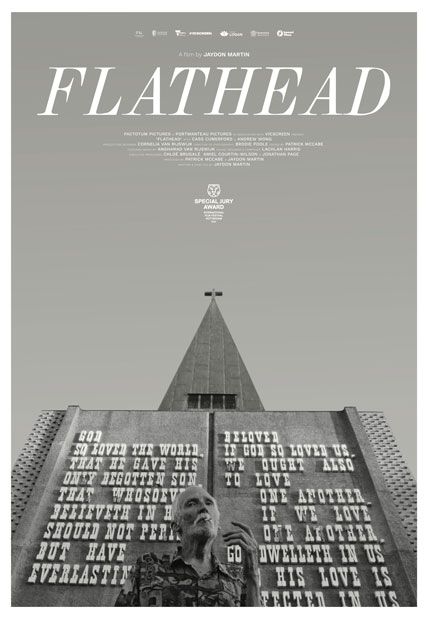
Late in life, Cass is drawn to his long-forsaken childhood home of Bundaberg, where he finds himself on a spiritual search for redemption.








Late in life, Cass is drawn to his long-forsaken childhood home of Bundaberg, where he finds himself on a spiritual search for redemption.

The purpose of this book is to introduce undergraduate students of engineering and the physical sciences to applied mathematics often essential to the successful solutions of practical problems. The topics selected are a review of Differential Equations, Laplace Transforms, Matrices and Determinants, Vector Analysis, Partial Differential Equations, Complex Variables, and Numerical Methods. The style of presentation is such that the step-by-step derivations may be followed by the reader with minimum assistance. Liberal use of approximately 160 examples and 1000 homework problems serves to aid students in their study. This book presents mathematical topics using derivations (similar to the technique used in engineering textbooks) rather than theorems and proofs typically found in textbooks written by mathematicians. Engineering Analysis is uniquely qualified to help apply mathematics to physical applications (spring-mass systems, electrical circuits, conduction, diffusion, etc.), in a manner as efficient and understandable as possible.

This book presents the development of electrospun materials, fundamental principles of electrospinning process, controlling parameters, electrospinning strategies, and electrospun nanofibrous structures with specific properties for applications in tissue engineering and regenerative medicine, textile, water treatment, sensor, and energy fields.

This book calls attention to the impact of stigma experienced by people who use illicit drugs. Stigma is powerful: it can do untold harm to a person and place with longstanding effects. Through an exploration of themes of inequality, power, and feeling ‘out of place’ in neoliberal times, this collection focuses on how stigma is negotiated, resisted and absorbed by people who use drugs. How does stigma get under the skin? Drawing on a range of theoretical frameworks and empirical data, this book draws attention to the damaging effects stigma can have on identity, recovery, mental health, desistance from crime, and social inclusion. By connecting drug use, stigma and identity, the authors in this collection share insights into the everyday experiences of people who use drugs and add to debate focused on an agenda for social justice in drug use policy and practice.

Although legal scholars have begun to explore the implications of neuroscientific research for criminal law, the field has yet to assess the potential of such research for intellectual property law – a legal regime governing over one-third of the US economy. Intellectual Property and the Brain addresses this gap by showing how tools meant to improve our understanding of human behavior inevitably shape the balance of power between artists and copyists, businesses and consumers. This first of its kind book demonstrates how neuroscience can improve our flawed approach to regulating creative conduct and commercial communications when applied with careful attention to the reasons that our system of intellectual property law exists. With a host of real-life examples of art, design, and advertising, the book charts a path forward for legal actors seeking reforms that will unlock artistic innovation, elevate economic productivity, and promote consumer welfare.

A determined young woman defies her father’s wishes to become a river guide, finding unexpected connections when a travel vlogger books her services for a challenging downstream journey.

A young father takes his nine year old son, the family dog, and two of his son’s friends backpacking in the mountains of Colorado only for all five of them to be struck by lightning.

Influencers do anything and everything to become more famous, but what if they have to risk their lives for it?

Rangers must relocate 21 black rhinos to a new sanctuary after their successful protection efforts led to overcrowding in their current space, which is surrounded by poachers.

Unveiled through a made-for-TV documentary, five tales of found footage horror emerge to take viewers on a terrifying journey into the grim underbelly of the 1980s.

Bjarke Ingels started out as a young man dreaming of creating cartoons. Now, he has been named “one of architecture’s biggest innovators” by The Wall Street Journal and one of The 100 Most Influential People on the planet by TIME Magazine. BIG TIME follows Bjarke during the course of 7 years (2009-2016), while he struggles to finish his biggest project so far. We are let into Bjarke’s creative processes as well as the endless compromises that his work entails, and we are on the side when his personal life starts putting pressure on him, too. In addition to the recently opened architectural marvel VIA 57 West (625 West 57th Street), Bjarke Ingels’ company Bjarke Ingels Group (BIG) was given the task of designing and building one of the skyscrapers which will replace Two World Trade Center in Manhattan. While Bjarke is creating these buildings, which will change the New York skyline, he is hit by health-related issues. The Film offers an intimate look into the innovative and ambitious …
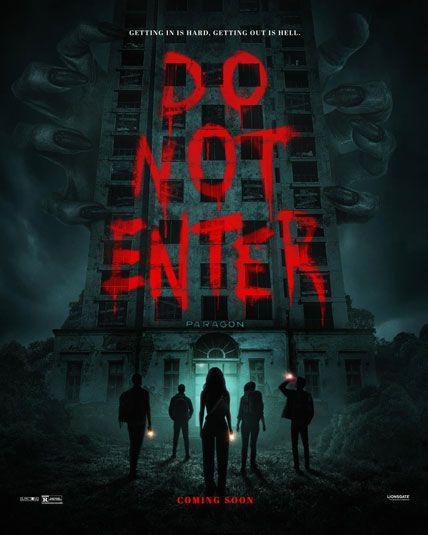
A group of explorers investigate an old abandoned hotel, encountering a strange supernatural being and a competing group searching for a legendary hidden treasure.